Carrier Mini-Split Leaking Water in Pasadena
In plain terms: A Carrier mini-split or AC leaking water in Pasadena 91101 to 91107 almost always means a clogged condensate drain, a failed pump, an open float switch, or a thawing frozen coil, not a refrigerant leak. Call Pasadena Carrier HVAC at (213) 513-5436 or book online and we clear the drain path and test the pump and float.
The short version
- Indoor water is condensate, not refrigerant; refrigerant is a gas you do not see pooling.
- Top causes: clogged condensate drain, failed condensate pump, open float switch, frozen-then-thawed coil.
- A tripped float switch opens the 24V circuit and stops cooling on purpose to prevent overflow.
- Frozen coils trace to a dirty filter or low refrigerant; we check charge if icing is involved.
- Cost lane: drain clearing $99-$250; pump replacement $150-$450; charge work higher.
- Service area Pasadena ZIPs 91101-91107.
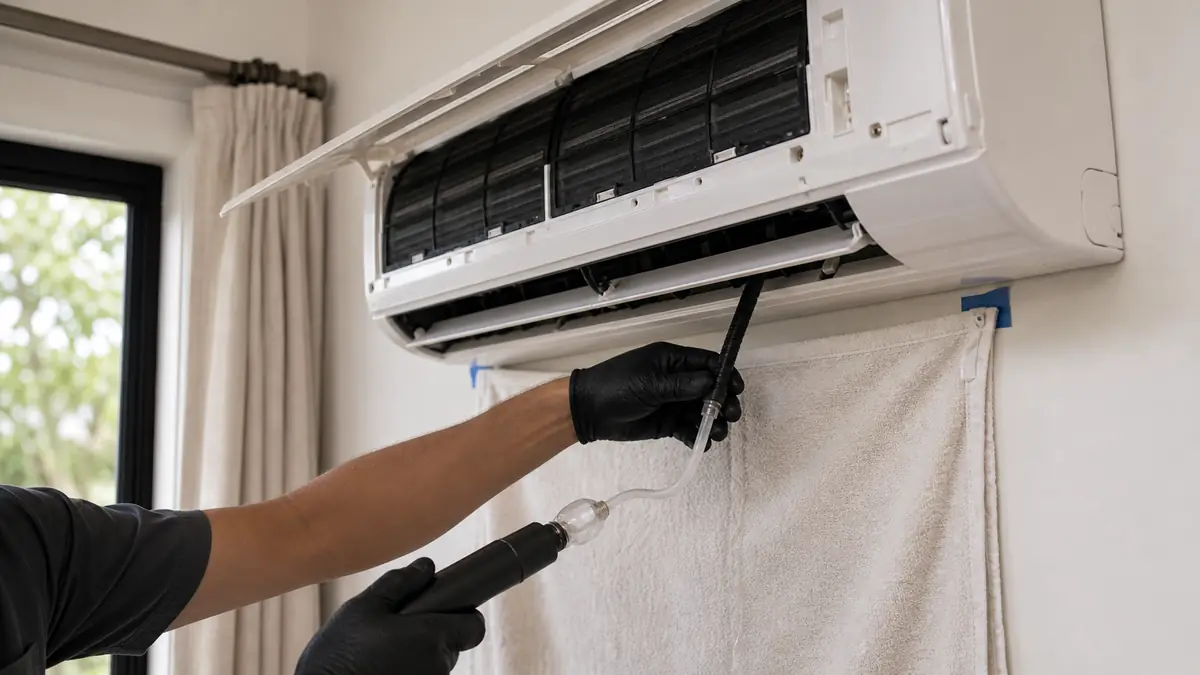
Why is my Carrier system leaking water in Pasadena?
Every cooling system makes condensate as it pulls moisture from the air, and that water has to drain away. When the drain line clogs with algae and dust, the pan overflows; when a condensate pump fails, the water has nowhere to go; when the coil freezes and then thaws, it sheds more water at once than the pan handles. In Pasadena's warm summers, a drain line that ran fine in spring clogs by July, which is the single most common leak call we field.
| Symptom | Likely cause / first check | Cost lane |
|---|---|---|
| Water dripping from a wall head | Clogged drain or failed drain pump | $99-$450 |
| Pooling under indoor coil/air handler | Clogged primary drain or slipped pan | $99-$300 |
| System stopped, water in pan | Open float (safety) switch by design | $99-$250 |
| Ice, then a flood when it thaws | Dirty filter or low refrigerant freezing coil | $225-$1,500 |
| Mini-split pan overflows fast | Failed condensate pump or drain sensor | $150-$450 |
What can I do before the tech arrives?
Turn the system off so the pan stops filling, and put a towel or shallow pan under the drip. If you can reach the condensate drain at the outdoor termination, the line is sometimes clearable with a wet/dry vacuum, but do not force a wire up a flexible mini-split line, which can tear it. If a float switch shut the system down, leave it off until the drain is cleared; running it just overflows the pan again.
How do you fix and prevent it?
We clear the drain line, flush the pan, treat for algae, and test the condensate pump and float switch. If the coil was icing, we check the filter and refrigerant charge because a leak that freezes the coil will keep flooding once it thaws. Routine drain flushing on a maintenance plan heads off most of these before peak summer. For an iced coil with weak output, see weak airflow.
What is the step-by-step on a leaking Carrier system?
We work the condensate path from the coil outward. First we confirm it is condensate and not a refrigerant problem by checking whether the coil is iced; clear water with no ice means the drain side. Then we check the primary drain line for a clog, the most common cause, by testing flow and, on a central air handler, pulling a wet/dry vacuum on the outdoor termination to draw the blockage out. We inspect the drain pan for cracks or a pan that slipped out of pitch, then test the float (safety) switch that is wired to open the 24V circuit and stop cooling when water backs up. On a ductless head or a system with a lift, we bench-test the condensate pump and its own float. If everything downstream is clear but water still overflows, we look upstream at the coil for the freeze-thaw cycle that sheds water faster than the pan can drain. That order finds the real cause instead of just mopping the symptom.
Is it the drain or a frozen coil?
The two leak families look similar on the floor but call for different fixes. A drain-side leak drips steadily whenever the system cools, the coil is wet but not iced, and clearing the line stops it. A freeze-thaw leak comes in surges: the coil ices over during a run, airflow drops, and when the system cycles off the ice melts all at once and floods past the pan. The tell is frost on the coil or the copper suction line. A frozen coil traces back to restricted airflow, usually a clogged filter, or to low refrigerant from a leak, so we check the filter and take refrigerant pressures rather than just clearing the drain. Treating a freeze-thaw flood as a simple clog leaves the real cause running, and an undercharged Carrier system will keep icing and flooding until the charge is corrected.
Common questions
Why is water dripping from my Carrier wall head onto the floor?
On a ductless or mini-split head, dripping inside almost always means the condensate drain is clogged or the drain pump failed, so the pan overflows. Algae and dust build a blockage over a Pasadena summer. We clear the line, flush the pan, and test the pump and float; it is usually a quick fix, not a refrigerant problem.
Is water near my indoor coil a refrigerant leak?
No. Refrigerant is a gas, not a liquid you see pooling; what you see is condensate water. Pooling water means the condensate path failed: a clogged drain, a slipped pan, or a frozen coil that thawed all at once. A frozen coil, though, can be caused by low refrigerant, so we check charge if icing is involved.
My Carrier system shut off and there is water in the pan. What tripped it?
Most systems have a float (safety) switch in the condensate pan or drain. When water backs up, the float opens the 24V circuit and stops cooling on purpose to prevent overflow damage. The shutdown is the symptom; the cause is the clog or failed pump. Clear the drain and the system restarts.
How do I stop the condensate drain from clogging every Pasadena summer?
Regular flushing and a pan treatment tablet slow the algae that thrives in warm condensate. A maintenance visit clears the line and tests the pump and float before peak cooling season. In humid stretches a backed-up drain is one of the most common no-cool calls we get in older homes.