SEER2, Title-24, and Pasadena HVAC Rebates in 2026
Last updated: 2026-06-13
In plain terms: A 2026 Carrier install across Pasadena 91101 to 91107 must meet the DOE Southwest SEER2 minimum and pass Title-24 HERS field verification, so call Pasadena Carrier HVAC at (213) 513-5436 or book online; with the federal 25C credit lapsed, LADWP, SCE, and SoCalGas are the live rebate money.
The short version
- The DOE puts California in its Southwest region, where the cooling-efficiency bar is set highest.
- Split-system AC floor: 14.3 SEER2 / 11.7 EER2 below 45k BTU; 13.8 SEER2 / 11.2 EER2 at 45k and up.
- Split air-source heat pumps: pass 14.3 SEER2 and 7.5 HSPF2 together.
- Pasadena reads as Title-24 Climate Zone 9; HERS sign-off routinely lands on charge, airflow, and duct work.
- The federal 25C credit ended on 12/31/2025; a 2026 install claims nothing.
- Still live: LADWP, SCE, SoCalGas, and TECH Clean California; reconfirm every amount before it goes in a quote.
- Figures here are dated and approximate; confirm current program terms.
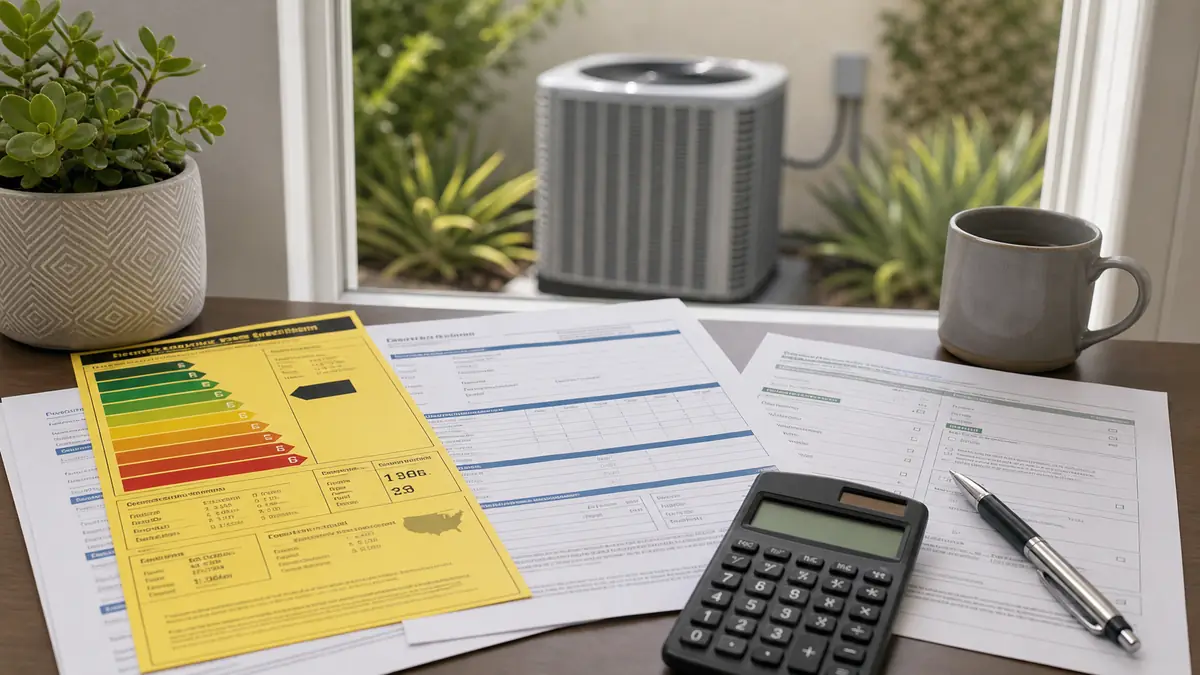
What is SEER2 and why does it matter in Pasadena?
SEER2 took over from SEER on January 1, 2023, when the federal test procedure was rewritten. The rewrite loads the equipment against higher external static pressure on the test bench, which mirrors what a coil actually sees behind real ductwork, so the SEER2 you read on the label is a harder-earned, more truthful number than the old SEER. For the heating side of a heat pump the parallel rating is HSPF2, and EER2 reports how the unit holds up under peak load on the worst afternoons.
For a Pasadena home that distinction is not academic. The city falls in cooling-dominant Climate Zone 9, where 25 to 40 days a year reach 90 F or higher and Santa Ana events drive spikes past 100 F, so the compressor logs serious summer hours and every SEER2 point compounds across all of them. Spec a top-of-range variable-speed Greenspeed Carrier system and you also keep temperature and humidity on a much tighter leash than a single-stage unit that keeps snapping on and off.
| Equipment | Minimum | Note |
|---|---|---|
| Split AC, under 45,000 BTU | 14.3 SEER2 / 11.7 EER2 | Most homes |
| Split AC, 45,000 BTU and above | 13.8 SEER2 / 11.2 EER2 | Larger homes |
| Split air-source heat pump | 14.3 SEER2 and 7.5 HSPF2 | National minimum |
| Carrier Infinity 25VNA4 (heat pump) | up to ~22 SEER2 / ~10.5 HSPF2 | Well above minimum |
Confirm the exact minimum for your equipment class and the current code cycle before relying on these figures.
What does Title-24 require for a Pasadena HVAC install?
Stacked above those federal equipment floors is California's Title-24, Part 6 energy code. It carves the state into 16 climate zones keyed to reference weather stations rather than municipal boundaries, and Pasadena lands in Climate Zone 9. The governing rules are the 2022 Energy Code, in force since January 2023 and refreshed by the 2025 cycle, which apply to both new and altered HVAC. What a homeowner actually feels are the field-verification line items an independent HERS rater has to sign.
Inside Zone 9 that usually breaks down to refrigerant-charge and airflow verification whenever a split system is installed or replaced, plus HERS duct-leakage testing on most duct work that gets altered or swapped. The code has steadily leaned toward heat-pump-ready and heat-pump-preferred baselines as well. Pulling a permit is the norm for a condenser or air-handler replacement, and the inspector will be looking for the HERS paperwork. We build the job to clear those checks and line up the rater, so nothing ambushes you at inspection.
Which Pasadena HVAC rebates still pay in 2026?
What shifted for 2026 is the loss of the federal 25C tax credit, the one worth 30 percent of project cost up to $2,000 a year on a heat pump; it was repealed effective December 31, 2025. Gear you bought and installed by that date can still ride onto the 2025 return, but a 2026 install draws no federal 25C credit at all. With that gone, Pasadena homeowners fall back on utility and state programs, and because those run in funding phases that open and close, treat every figure in the table below as provisional until you check it against the official source.
| Program | Covers | Reported amount |
|---|---|---|
| LADWP heat-pump rebate | Heat-pump HVAC replacing gas/electric resistance (LADWP electric customers) | Up to ~$2,500/ton, tiered; verify |
| SCE building electrification | Single-family heat-pump HVAC (SCE electric customers) | ~$1,000/system, up to 2/home; verify |
| SoCalGas HEER | High-AFUE gas furnaces, smart thermostats | Up to ~$600 furnace, ~$50 stat; verify |
| TECH Clean California | Heat-pump HVAC and water heaters statewide | Varies by program phase; verify |
| Federal 25C credit | Heat pumps (expired) | None for 2026 installs |
A Pasadena-specific caveat: who delivers your power is not the same as in the City of Los Angeles, so verify which electric utility actually serves your address before you assume a given rebate is yours. Pasadena Water and Power, SCE territory, and LADWP territory are three different maps, not one.
What does a higher SEER2 actually save, worked out?
Run the math on a representative Pasadena home rather than a chart. Take a 3-ton cooling load and roughly 1,200 run-hours across a Climate Zone 9 summer of 25 to 40 days over 90 F. A code-minimum 14.3 SEER2 unit and a top-tier Carrier Infinity Greenspeed system near 22 SEER2 deliver the same cooling, but the efficiency ratio means the high-SEER2 unit draws materially fewer kilowatt-hours for those same hours, on the order of a third less cooling energy in round numbers. At a typical SoCal residential rate, that gap is real money each summer, and because Zone 9 is cooling-dominant the savings repeat every year the system runs. The table below frames the tradeoff; the exact dollars hinge on your rate plan, your actual run-hours, and any open rebate, which is why we model it against your own SCE or Pasadena Water and Power bill instead of a generic payback figure.
| System | Rated SEER2 | Relative summer cooling energy | Best fit |
|---|---|---|---|
| Code-minimum single-stage | 14.3 SEER2 | Baseline (100%) | Rental or short-hold home |
| Performance two-stage 26TPA8 | ~17-18 SEER2 | Roughly 80% of baseline | Balance of cost and comfort |
| Infinity Greenspeed 25VNA4 / 24VNA6 | up to ~22-26 SEER2 | Roughly 60-65% of baseline | Long-hold, comfort-first home |
Percentages are illustrative ratios from the SEER2 ratings, not a guaranteed bill reduction; actual savings depend on rate, runtime, charge, and duct condition.
Why does sizing matter as much as the SEER2 number?
A high SEER2 rating is wasted on a system that is the wrong size for the house. The rated efficiency is measured under controlled conditions; in the field, an oversized unit short-cycles, snapping the air cold then shutting off before it has wrung humidity out or balanced the far rooms, which both wastes energy and shortens compressor life. That is why we run a Manual J load calculation on an older Pasadena home rather than matching the tonnage of the unit being replaced, because the original system was often oversized to begin with. Single-pane windows, thin wall insulation, and the foothill heat-island load all feed that calc, and the answer frequently lands a half-ton off a quick rule-of-thumb guess. A right-sized variable-speed Greenspeed system then modulates from about 25 to 100 percent capacity, holding setpoint at low speed on mild days and only ramping up on the worst Santa Ana afternoons, which is where the rated SEER2 actually shows up on the bill.
How do I stack incentives without overpromising?
In past years you could layer a utility rebate on top of the federal credit, but with 25C off the board the 2026 stack is utility money plus whatever state TECH funding is still flowing. The straight approach is to check each program's status and your address eligibility while we are quoting, then carry only the verified, currently funded numbers into the proposal. A rebate never goes in as a locked-in discount; it goes in as a program to apply for, cited to its official source, because a funding phase can close with no warning.
What SEER2 tier should a Pasadena home pick?
For a cooling-heavy Zone 9 home that plans to stay put, a higher-tier variable-speed Greenspeed system earns its premium through runtime savings and comfort. For a rental or a home you plan to sell soon, a code-minimum or value Performance unit makes more sense. The deciding factors are your electricity rate, your summer usage, and whether a current rebate offsets the higher-efficiency unit. We model both against your actual bill rather than a generic payback table.
| Goal | Carrier tier | Installed lane |
|---|---|---|
| Lowest upfront, meets code | Comfort 26SCA5 / Performance 27SPA6 | $5,000-$9,000 |
| Balance of cost and comfort | Performance 26TPA8 / 27TPA8 | $6,000-$11,000 |
| Best efficiency and comfort | Infinity Greenspeed 25VNA4 / 24VNA6 | $10,000-$16,000 |
Common questions
What is the minimum SEER2 for a new AC in Pasadena in 2026?
Because Pasadena sits in California, the DOE assigns it to the Southwest region, which holds the tightest cooling thresholds in the country. A split-system AC under 45,000 BTU has to clear 14.3 SEER2 / 11.7 EER2; once you cross 45,000 BTU the floor eases to 13.8 SEER2 / 11.2 EER2. Split air-source heat pumps are rated against two numbers at once, 14.3 SEER2 and 7.5 HSPF2. Pin down the figure that applies to your exact equipment class before any order goes in.
Is the federal 25C heat-pump tax credit available for a 2026 Pasadena install?
No. Congress repealed the federal Energy Efficient Home Improvement Credit, Section 25C, as of December 31, 2025. The only way to still claim it is on a 2025 return, and only for gear you both bought and installed by that cutoff. Nothing dated to a 2026 install qualifies, so a Pasadena project this year leans on utility rebates rather than the tax code. Check current IRS guidance to be sure.
How much can LADWP pay toward a heat pump in Pasadena?
LADWP has posted heat-pump rebates reported as high as roughly $2,500 per ton on qualifying high-efficiency equipment, scaled by efficiency tier, which puts a top-tier 4-ton system in the neighborhood of $10,000. The catch in Pasadena is that the electric-utility map is not uniform and program funding moves in phases, so treat that per-ton figure as a starting point and confirm both your eligibility and the live amount on the official LADWP page before you bank on it.
Do I need HERS testing for a Carrier install in Pasadena?
Most of the time, yes. Title-24 in Climate Zone 9 generally calls for refrigerant-charge and airflow checks on any new or swapped-out split system, and it adds HERS duct-leakage testing once you touch the ducts. The sign-off comes from an independent HERS rater, not from us; our part is building the job to pass on the first try and scheduling that rater against your permit.
Does a higher SEER2 system actually pay back in Pasadena?
Often it does. Climate Zone 9 is cooling-dominant, so the equipment grinds through long summer hours, and every point of SEER2 multiplies across that runtime. Drop in a variable-speed Greenspeed unit and you gain steadier humidity and comfort on top of the efficiency. Where the payback lands still hinges on your runtime, your electricity rate, and whatever rebate is open, which is exactly why we run the math against your own home rather than a chart.